

- Part 1The Job Nobody Wrote DownIf you are the whole growth team, you do not have a job. You have a department with one name on it, and nobody wrote it down, including you. Before you decide what to stop, automate, or hire for, write the job down by recurrence, not by function, and tag every line. The longest column is the one nobody owns.Brad Webb

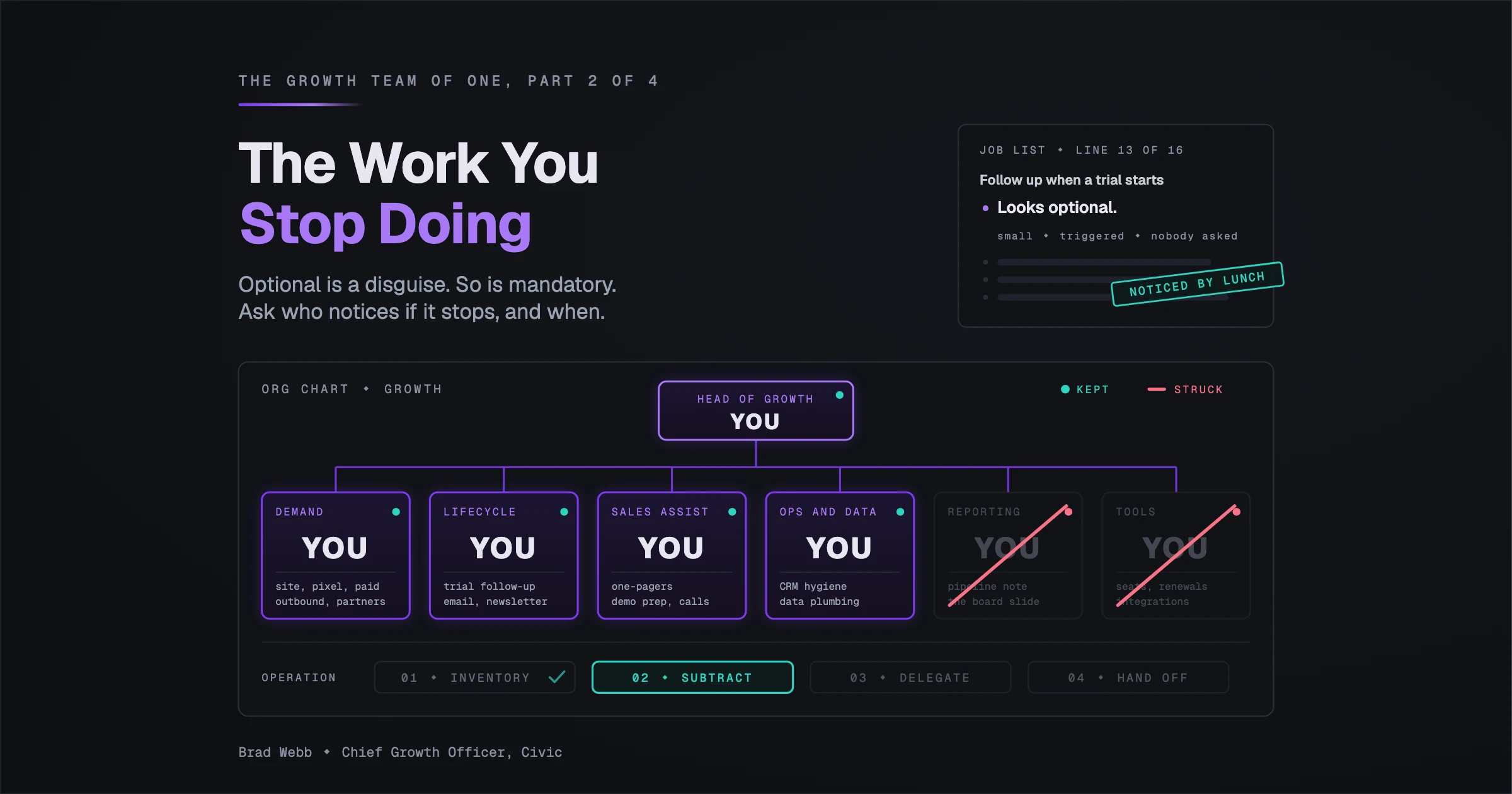
- Part 2The Work You Stop DoingSubtraction is the step everyone wants to start with, and most of us do it backwards. We cut what looks optional because it is small and nobody asked for it, and keep what looks mandatory because it has a meeting attached. Looks are the disguise. Before you stop anything, flip every line from how it looks to who would notice if it stopped, and when. Stop the work nobody would notice for a month. Never stop the work a customer would notice by lunch.Brad Webb
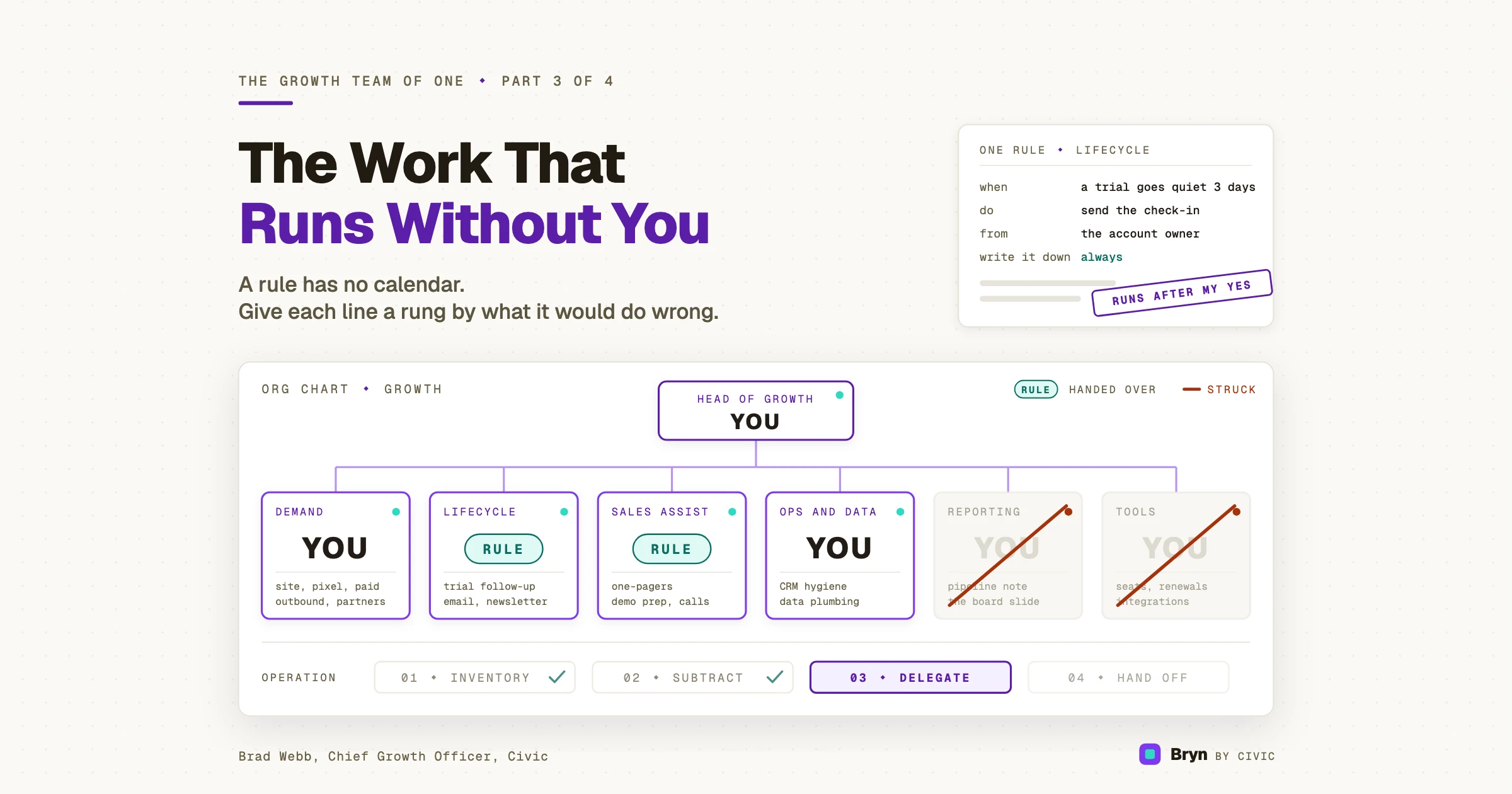
- Part 3The Work That Runs Without YouBy hand, a trial that went quiet on Tuesday heard from me nine days later, or not. A rule drafts the check-in at ten past ten. This part sorts the small customer work onto three rungs by what one wrong run would cost, and writes the rule in four fields.Brad Webb
- Part 4The Stack You Hand OverDon't write a handover doc. It's what you remember, written the week you're busiest, and the new person spends two weeks asking what it left out. Ask one question of every task instead: could someone run this from the record alone? The record is what the work already leaves behind: your task list, your rules (when this happens, do that), and a line for every run. The yes lines are handed over already. The no lines are this week's writing.Brad Webb
